A pergola often becomes most valuable when the seasons begin to change.
Through summer, it softens direct sunlight and makes terraces or gardens more usable. When the rains arrive, it continues to define the outdoor space and connect the home to the exterior.
But the selected material determines how well the pergola retains its appearance through heat, humidity, rainfall and daily exposure.
For Indian homeowners, architects and developers, the choice often comes down to natural wood or WPC.
Both bring warmth and architectural character. The difference lies in what each material demands over time.
What Is a Wooden Pergola?
A wooden pergola uses natural timber as the visible finish and, in some designs, as part of the structure.
Its appeal comes from authentic grain and craftsmanship. Its durability depends on timber species, treatment, installation quality and maintenance frequency.
Wood can perform well outdoors when correctly selected and protected. However, it may be affected by moisture, termites, cracking and repeated weather exposure.
What Is a WPC Pergola?
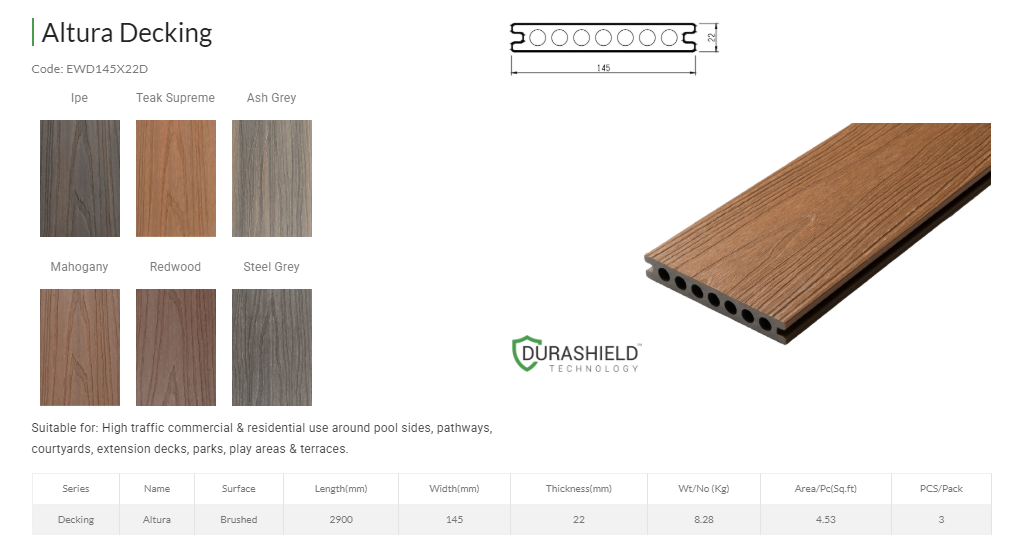
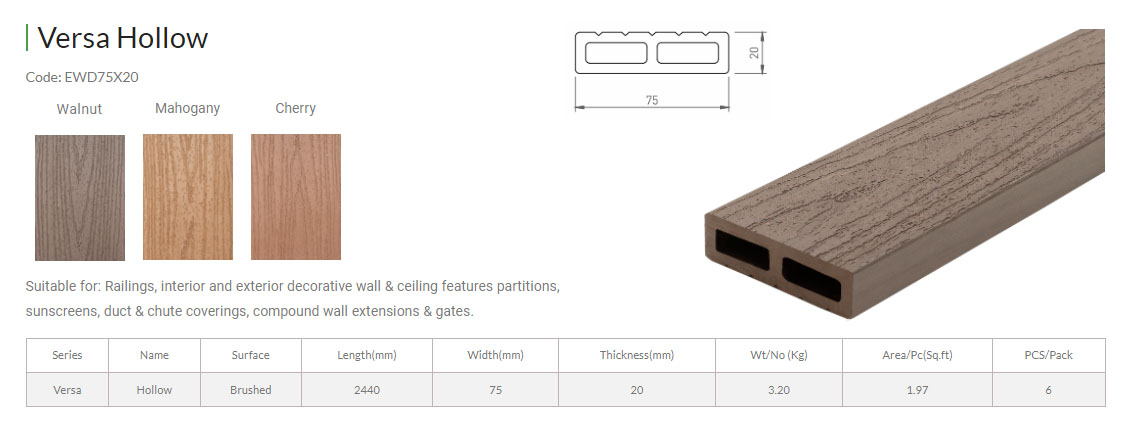
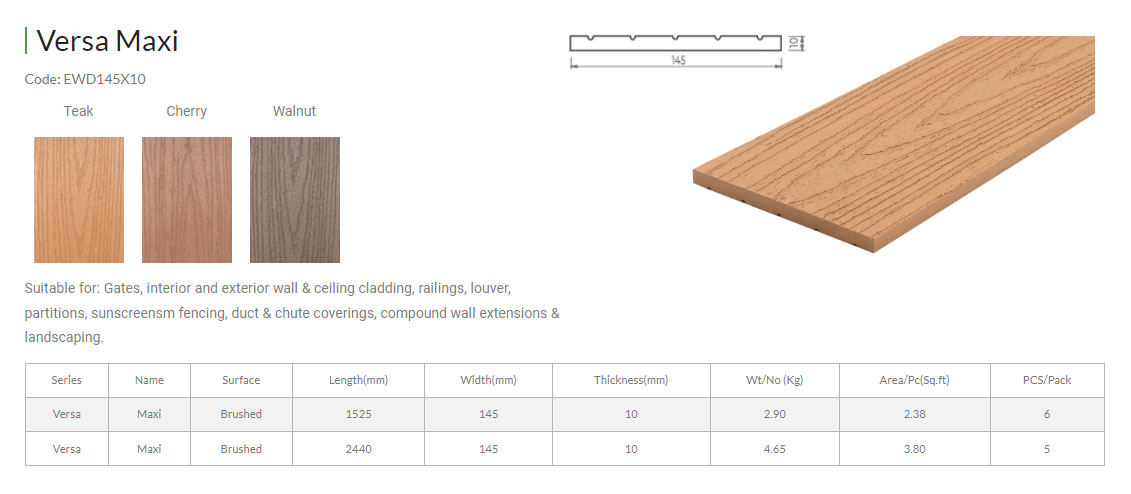
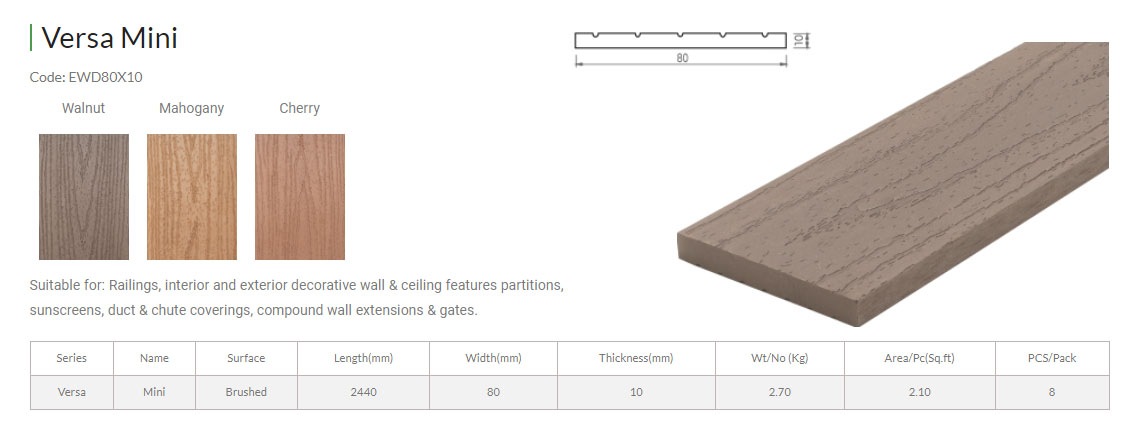
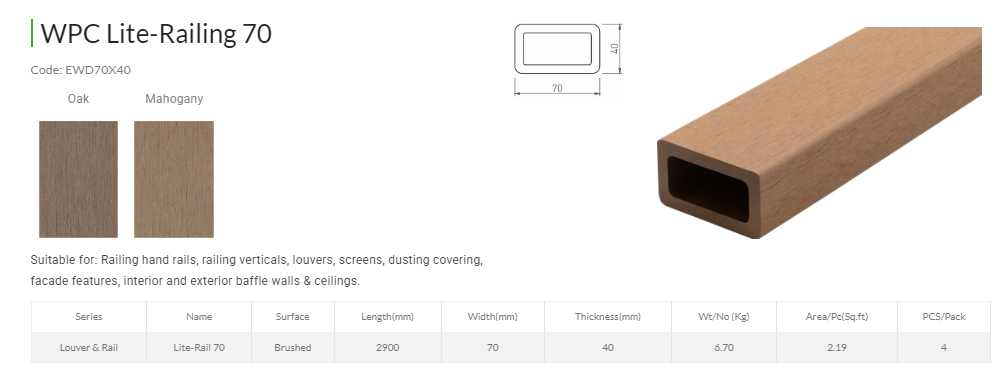
WPC, or Wood Plastic Composite, combines wood fibres with polymers to create exterior profiles.
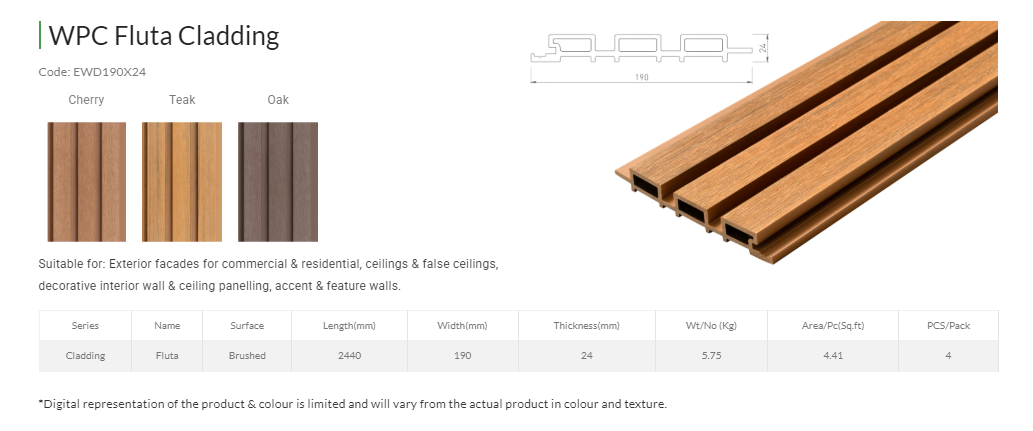
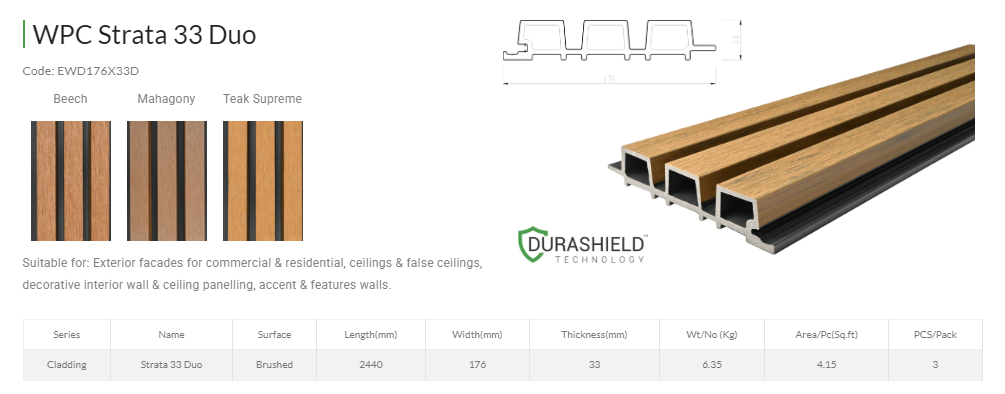
WPC pergolas offer wood-inspired warmth with lower routine maintenance across terraces, gardens, poolside lounges and modern facades.
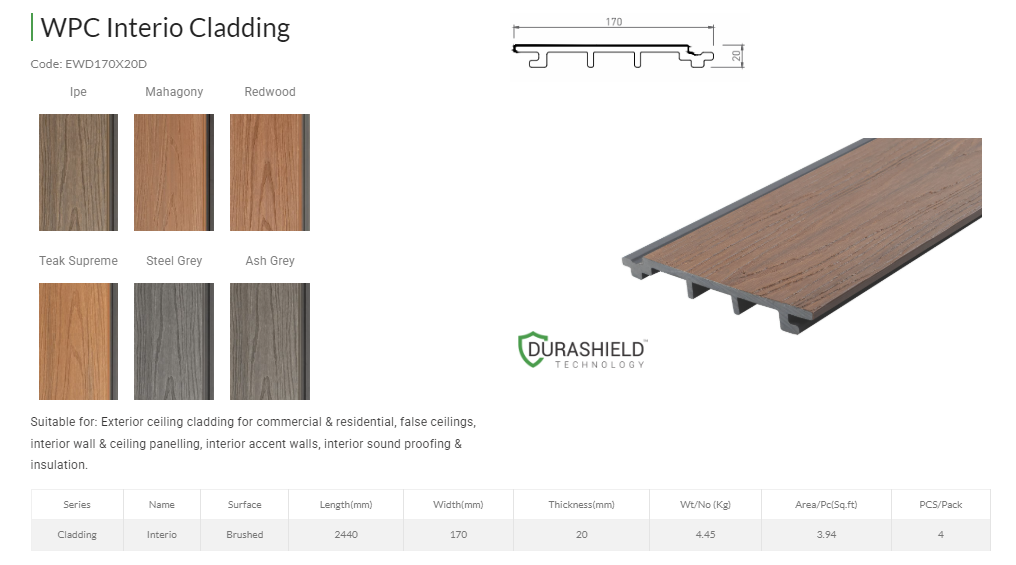
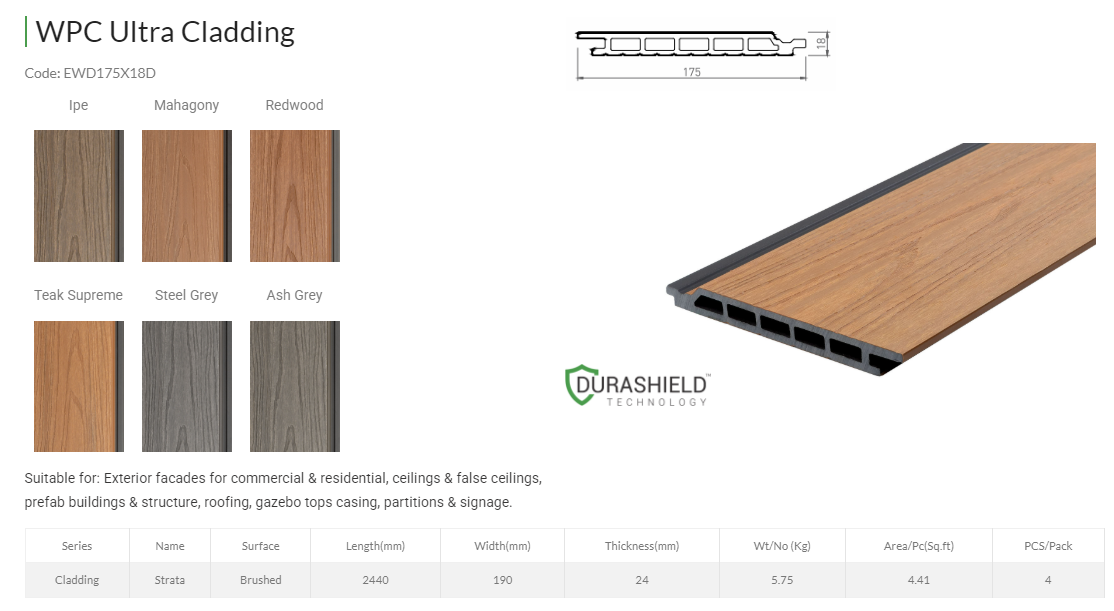
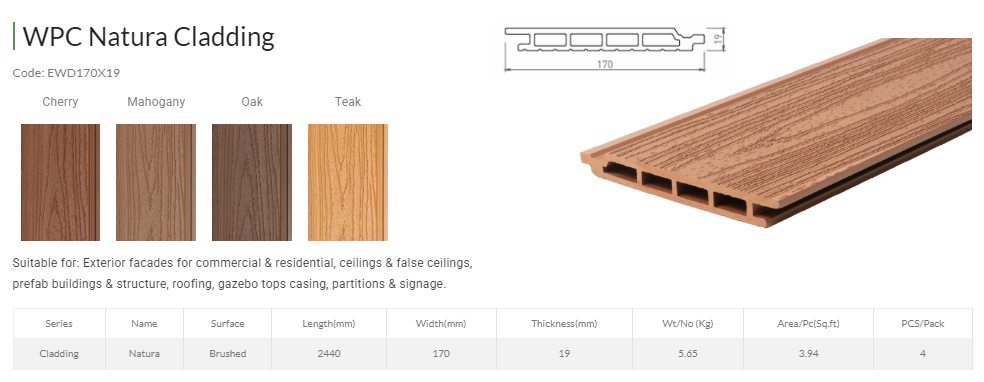
The visible WPC profile usually sits over a designed supporting framework and should not be treated as structural unless specifically engineered for that purpose.
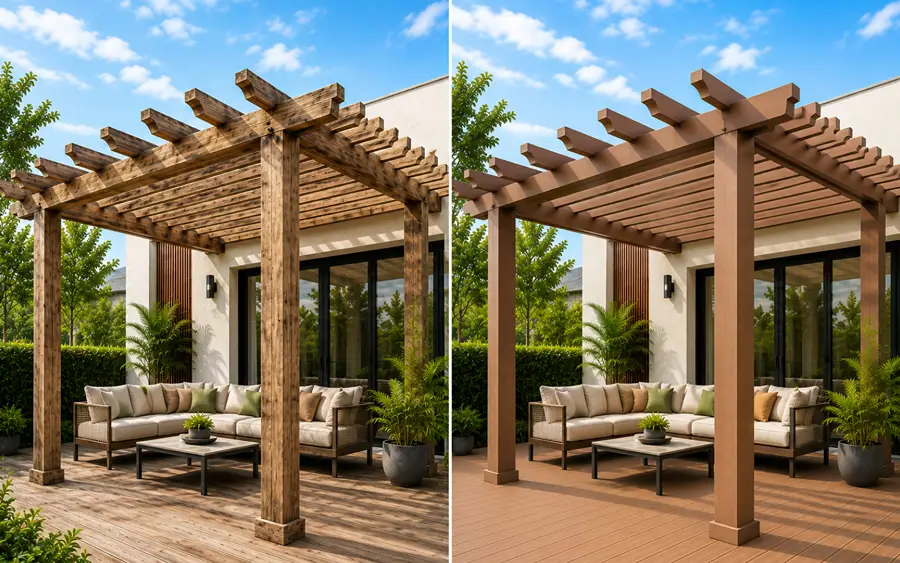
WPC Pergola vs Wooden Pergola at a Glance
A wooden pergola offers authentic grain but may need sanding, sealing, polishing and termite treatment. Its cost depends heavily on timber species and treatment.
A WPC pergola offers a consistent wood-inspired finish, lower routine upkeep and greater resistance to moisture-related deterioration. Its cost depends on the profile, framework and installation.
Which Looks More Premium?
Natural wood offers authentic grain and individual variation.
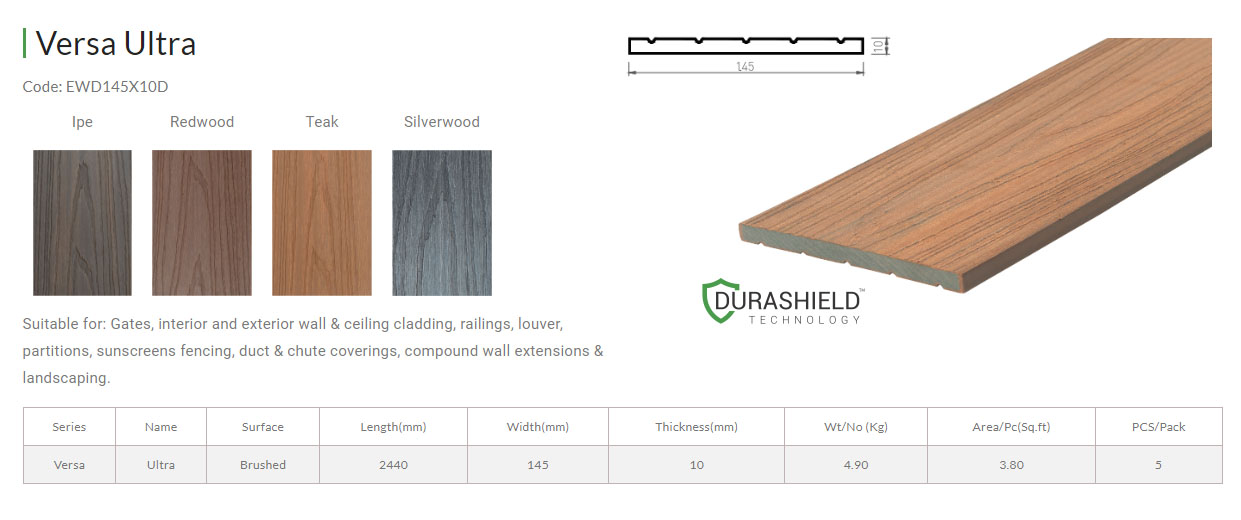
WPC offers a more consistent finish that can coordinate with decking, fins, louvers, cladding and railings.
The choice depends on whether the project prioritises natural variation or architectural continuity.
Which Performs Better Through Summer?
Indian summers expose pergolas to prolonged UV and high surface temperatures.
Natural wood may fade, dry, crack or lose surface coating depending on the species and finish.
WPC is designed for exterior use, but product quality, colour, airflow and exposure still matter. Sun direction, ventilation and framework should be considered for both materials.
Which Is Better When the Monsoon Arrives?
The shift from summer heat to monsoon moisture places additional stress on outdoor materials.
Wood can absorb moisture if coatings or joints are not protected. This may contribute to swelling, warping, fungal growth or rot.
Exterior-grade WPC offers greater resistance to moisture-related deterioration and avoids the same sealing cycle as natural timber.
However, drainage, suitable fasteners and a correctly designed framework remain essential.
Which Requires Less Maintenance?
Wooden pergolas may require cleaning, sanding, sealing, staining, polishing, termite treatment and repair of weathered sections.
WPC pergolas generally require dust and leaf removal, occasional washing, surface cleaning and periodic checks of the framework, fasteners and drainage.
WPC is low maintenance, not maintenance-free.
The advantage is wood-inspired warmth without making refinishing a recurring project.
How Do Costs Compare?
A pergola quotation should include material, framework, size, design complexity, fabrication, installation and future maintenance.
Premium hardwood can be expensive and may still need periodic care. WPC may cost more than basic timber options, but it avoids recurring polishing, staining and termite-treatment cycles.
Compare complete installed systems, not only visible profiles.
Which Offers Better Lifecycle Value?
Lifecycle value includes the product, framework, installation, maintenance and repairs.
Natural wood can last well when maintained correctly. That maintenance must be budgeted.
WPC may involve a higher initial investment depending on the range and project, but lower routine upkeep can improve long-term value.
For premium projects, this predictability can matter as much as the initial price.
Which Is Better for Humid or Coastal Locations?
WPC can be relevant in humid environments because it offers greater resistance to moisture-related deterioration.
However, the concealed framework and fasteners must also suit the location. A durable visible profile cannot compensate for a corroding support system.
Which Should You Choose?
Choose wood when authentic timber, natural variation and traditional craftsmanship are priorities, and periodic maintenance is acceptable.
Choose WPC when you want wood-inspired warmth with lower routine upkeep, greater finish consistency and easier coordination with other exterior applications.
The choice should balance climate, aesthetics, installed cost and ownership expectations.
Why Everwood WPC Pergolas Work for Indian Exteriors
Summer brings heat, dust and UV exposure. The rainy season brings moisture, humidity and repeated wetting.
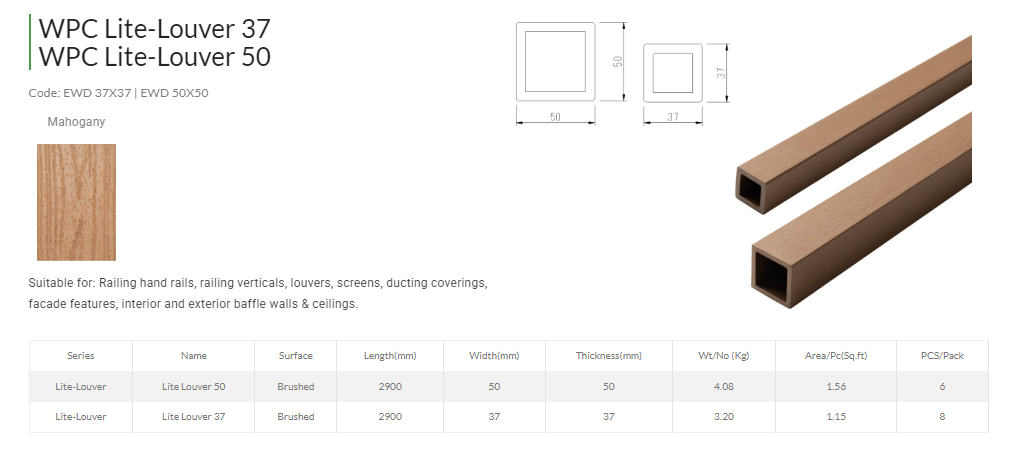
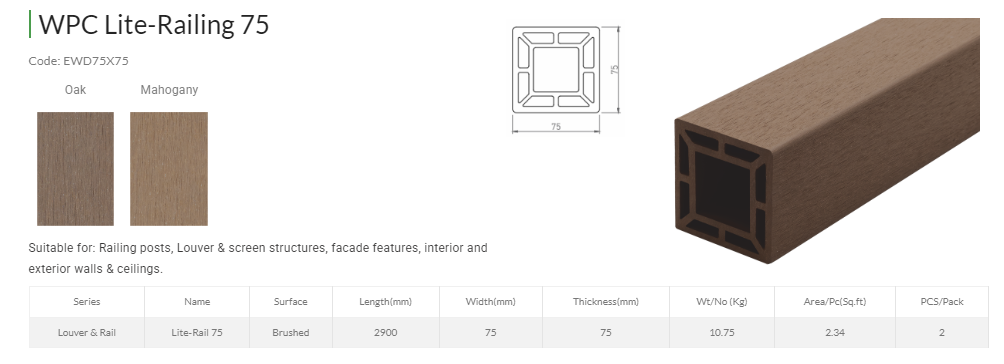
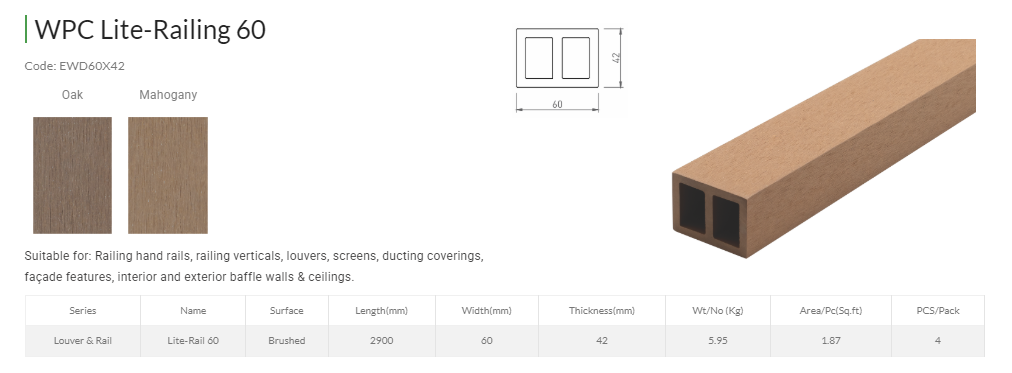
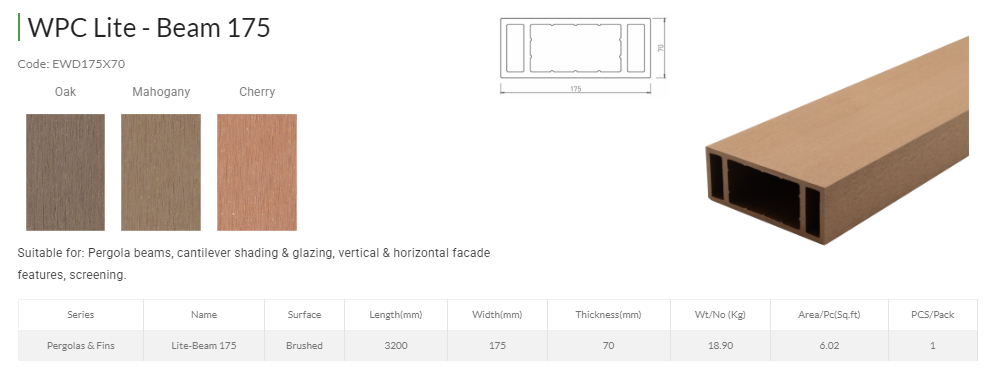
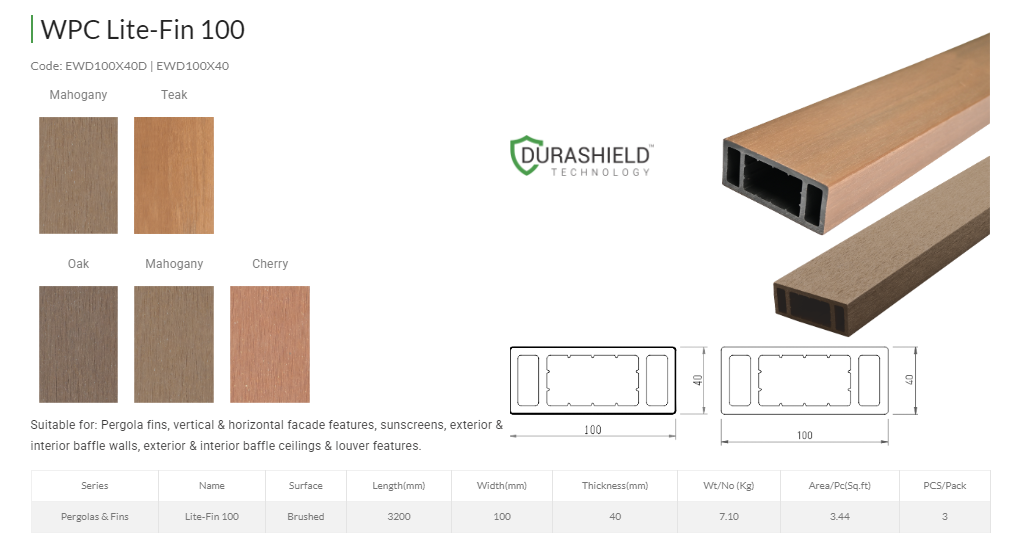
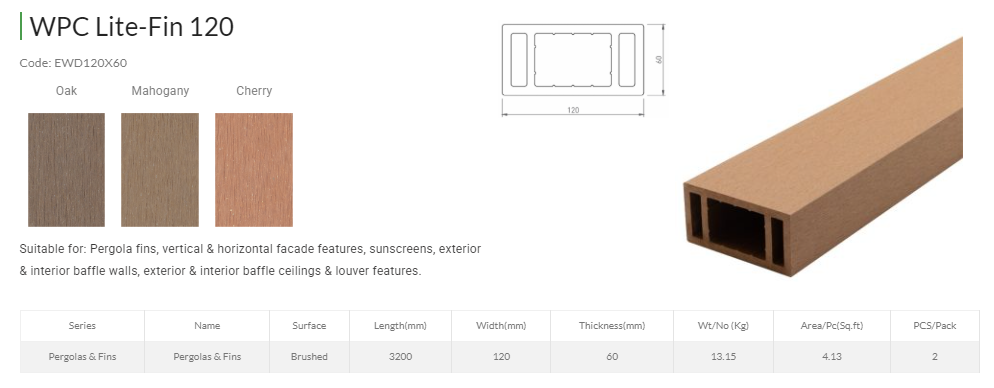
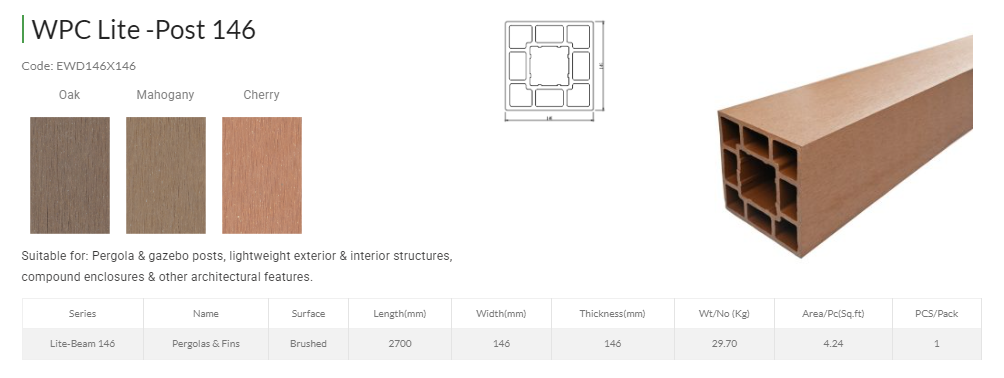
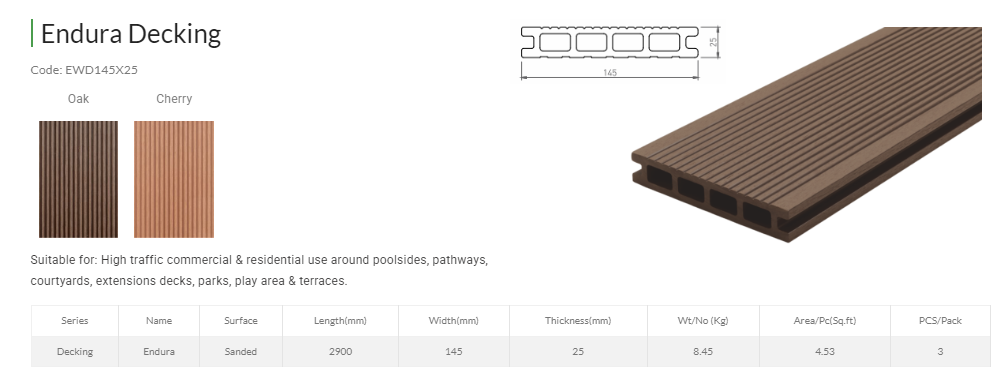
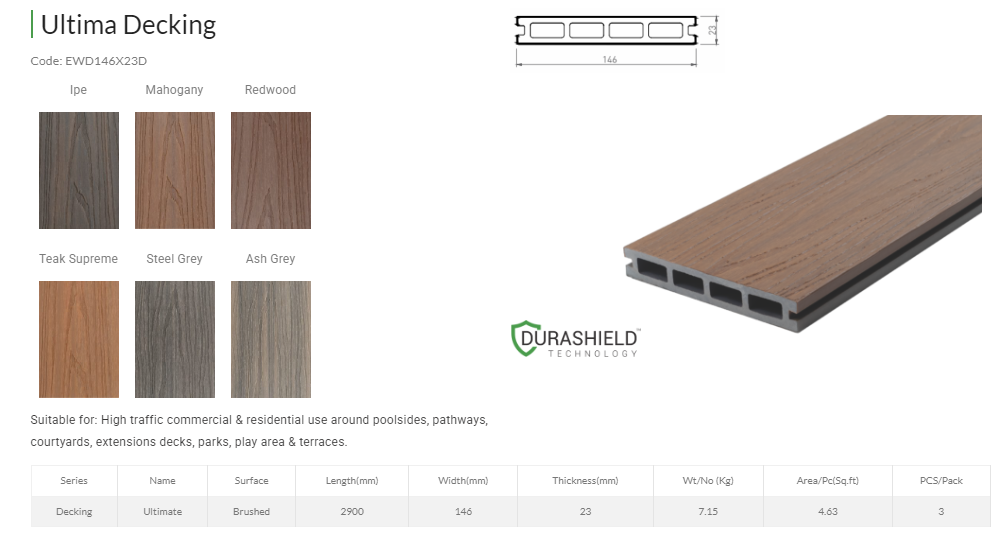
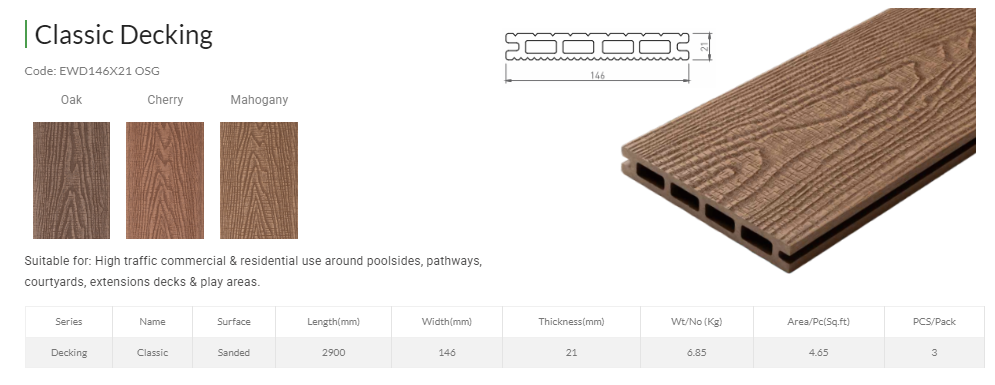
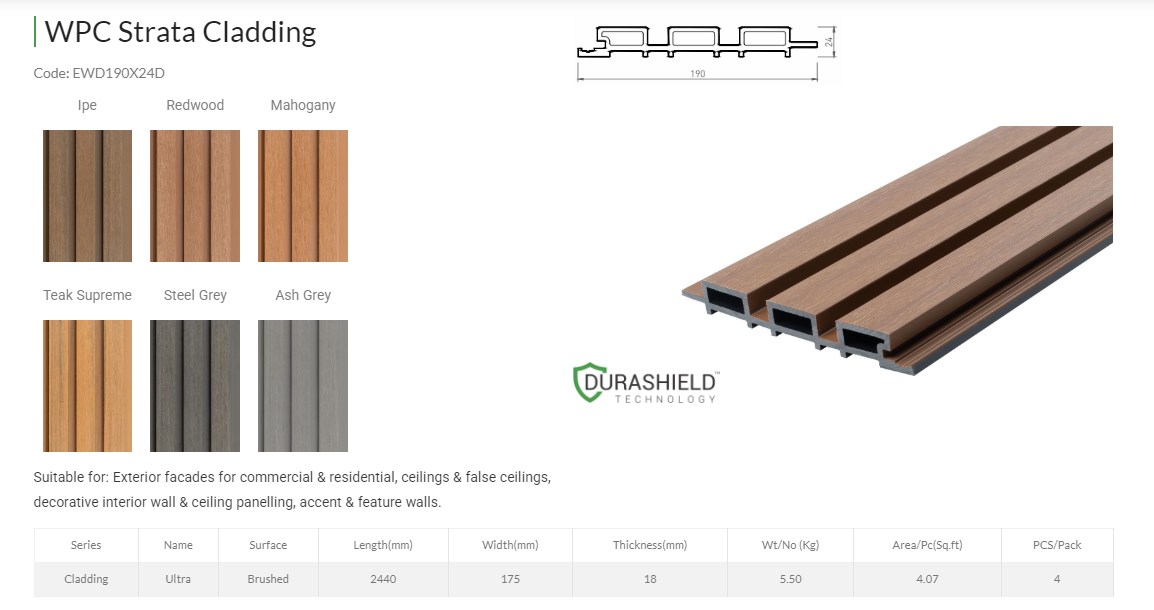
Everwood WPC pergola and fin solutions are designed for exterior use and bring premium wood-inspired tones to terraces, gardens, poolside spaces and architectural projects.
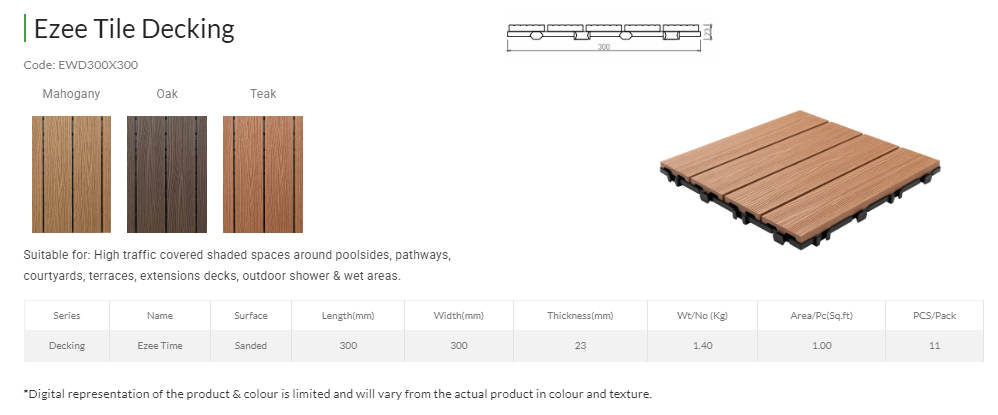
They can also be coordinated with Everwood decking, exterior cladding, louvers, screens, railings and facade accents.
For homeowners, this means outdoor warmth without recurring timber maintenance. For architects and developers, it supports finish consistency across multiple applications.
Explore Everwood WPC Pergolas and Fins.
Neither is universally better. Wood offers authentic timber character. WPC offers wood-inspired aesthetics with lower routine maintenance and greater moisture resistance.
Initial cost depends on the WPC range, timber species, framework, size and installation. WPC may offer better lifecycle value when recurring treatment costs are included.
Exterior-grade WPC is designed for outdoor exposure, but correct drainage, framework, fixing and joint detailing are essential.
WPC does not generally require the recurring polishing, staining and sealing cycle associated with natural timber. Routine cleaning is still recommended.