When a Façade Sets the Tone: An Architect's Story
Architect Kavya still remembers a pitch she made for a luxury beach villa near Kovalam. The client walked in with a simple brief — or so she thought. The client anted a façade that looked natural, felt premium, resisted humidity, stayed colour-stable under harsh sun, and needed zero maintenance. Kavya had seen what coastal weather did to natural wood. She had watched HPL panels fade within two summers. She had dealt with cracked cement boards and high-maintenance timber battens.
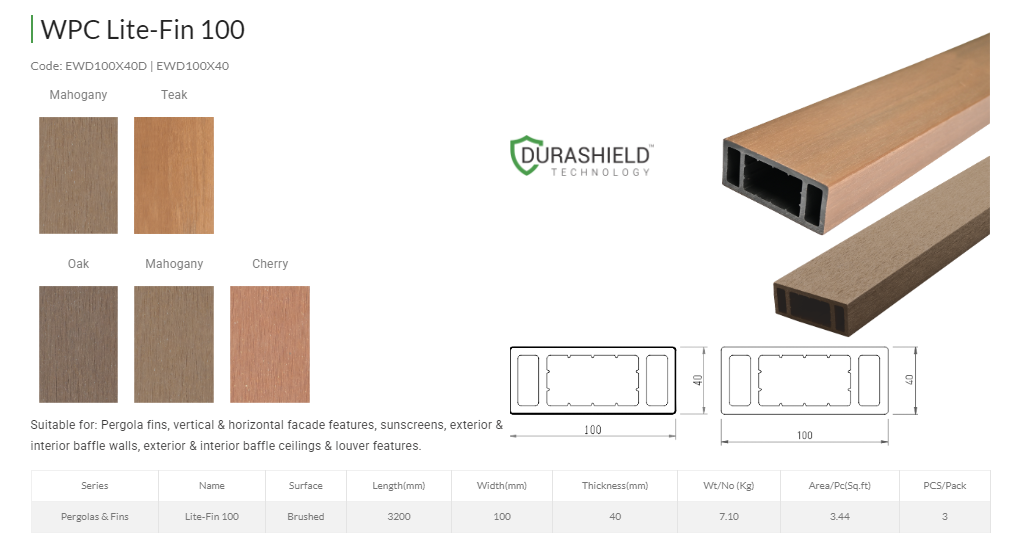
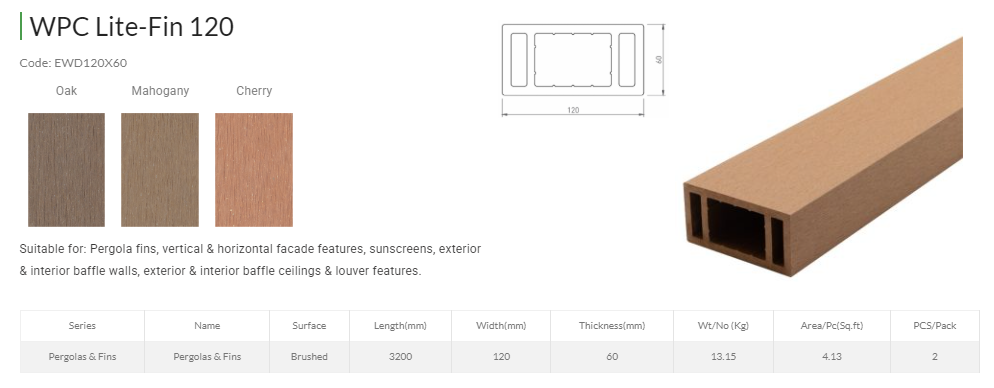
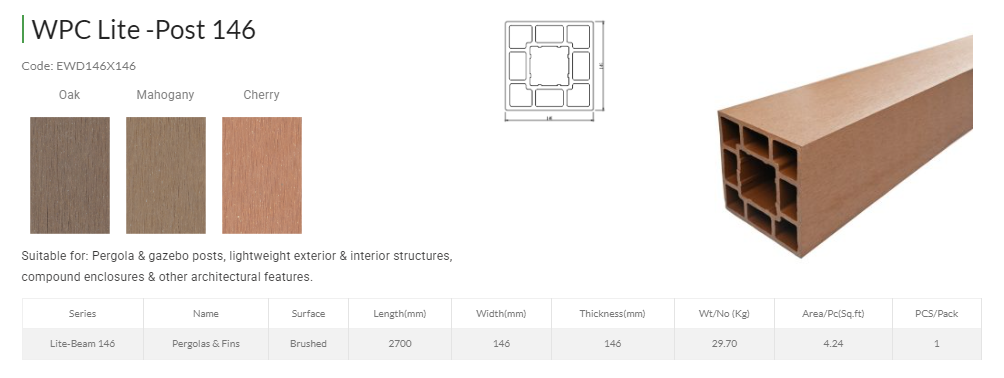
Now, he Architect needed a material that looked like wood but behaved better than wood. That search led her to Everwood’s WPC façade solutions, and it changed how she approached exterior cladding architects for villas and resorts.
This guide follows the same framework she now uses in every façade project.
Start with the Architectural Intent
Great façade outcomes begin with design clarity.
Choose the Visual Language That Defines Your Project
Everwood’s colour palette supports a wide variety of architectural moods:
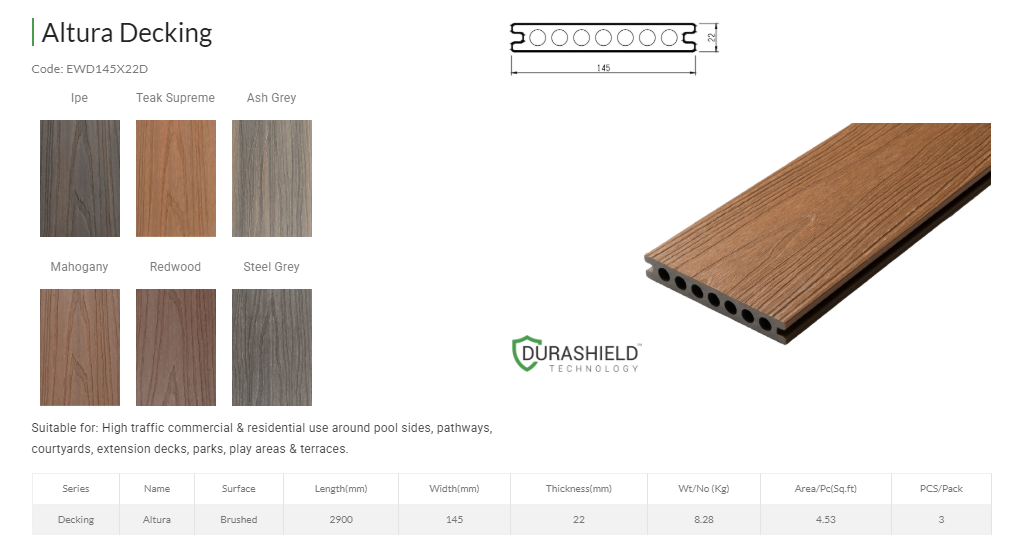
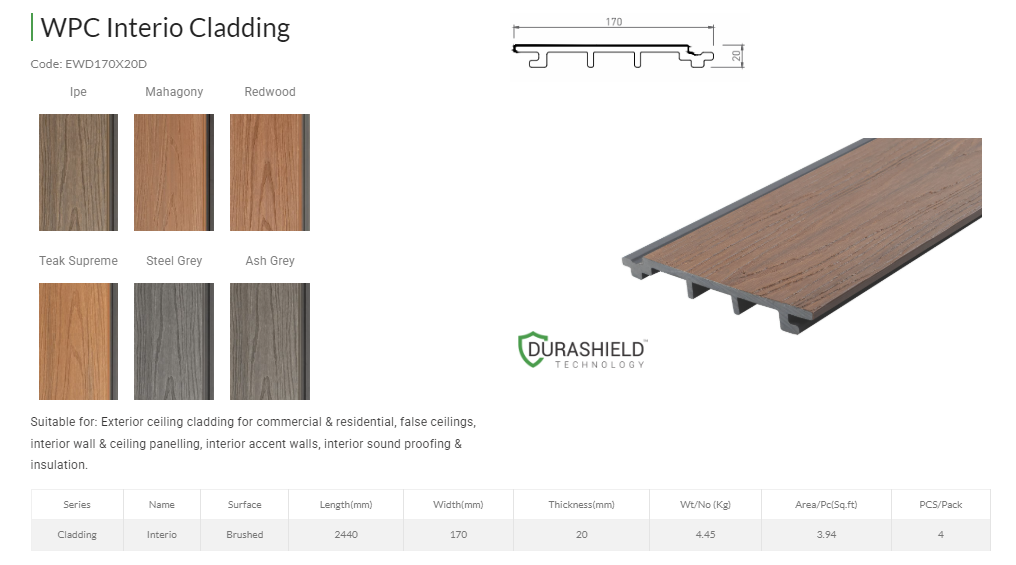
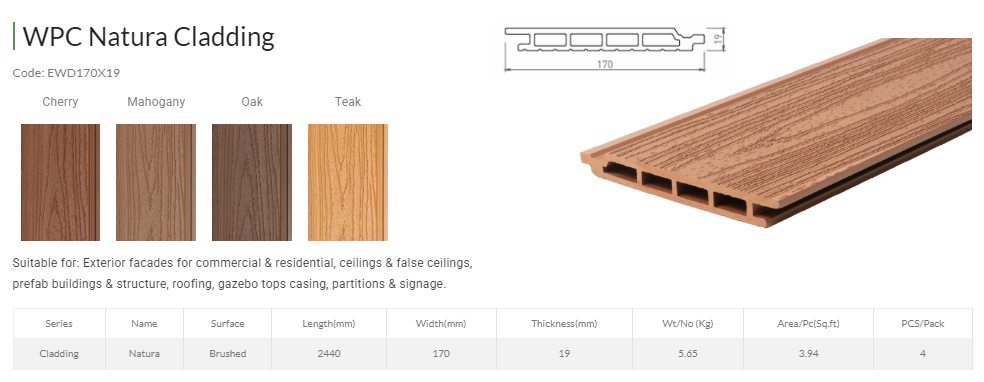
- Warm & Natural:Teak Supreme, Walnut, Mahogany, IPE
- Modern & Minimal:Ash Grey, Steel Grey, Charcoal
- Tropical & Earthy:Wenge, Teak variants
These colours are engineered for exterior use and resist fading across Indian climates.
Define Surface Character with Texture
Everwood offers:
- Deep wood grain
- Brushed matte
- Natural timber-like textures
Perfect for villas, resorts, cottages and hospitality projects.
Choose Profile Depth That Shapes Visual Impact
Deep profiles create dynamic shadows:
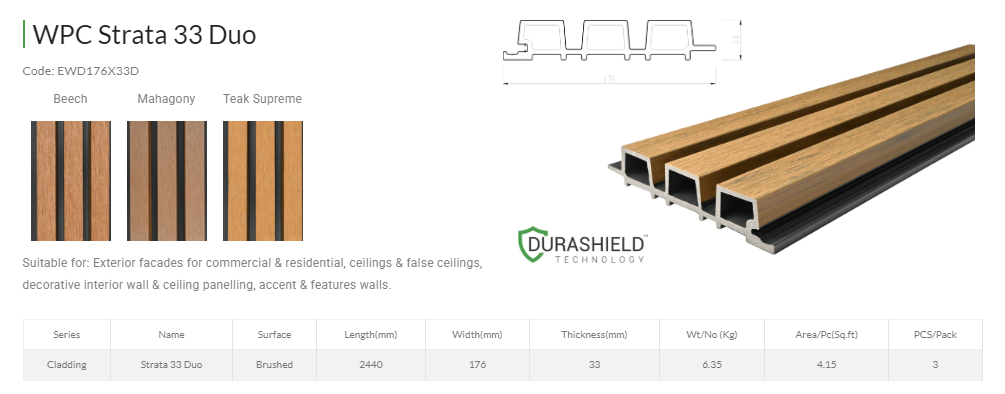
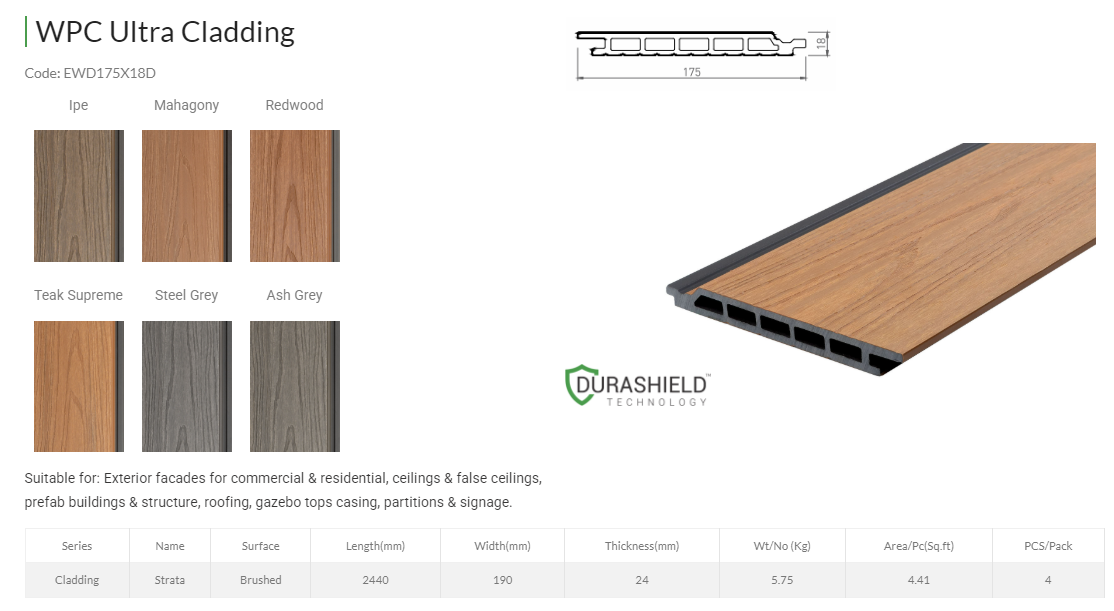
- Strata 33 Duo (33 mm)→ bold, architectural
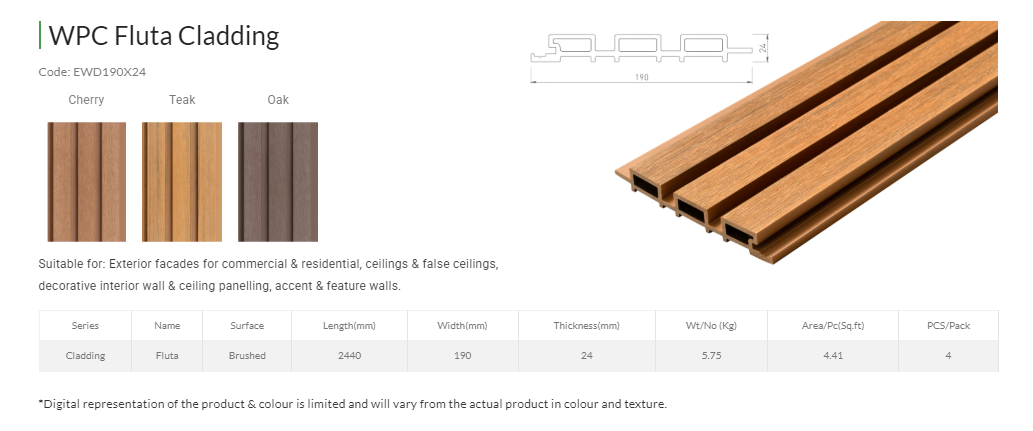
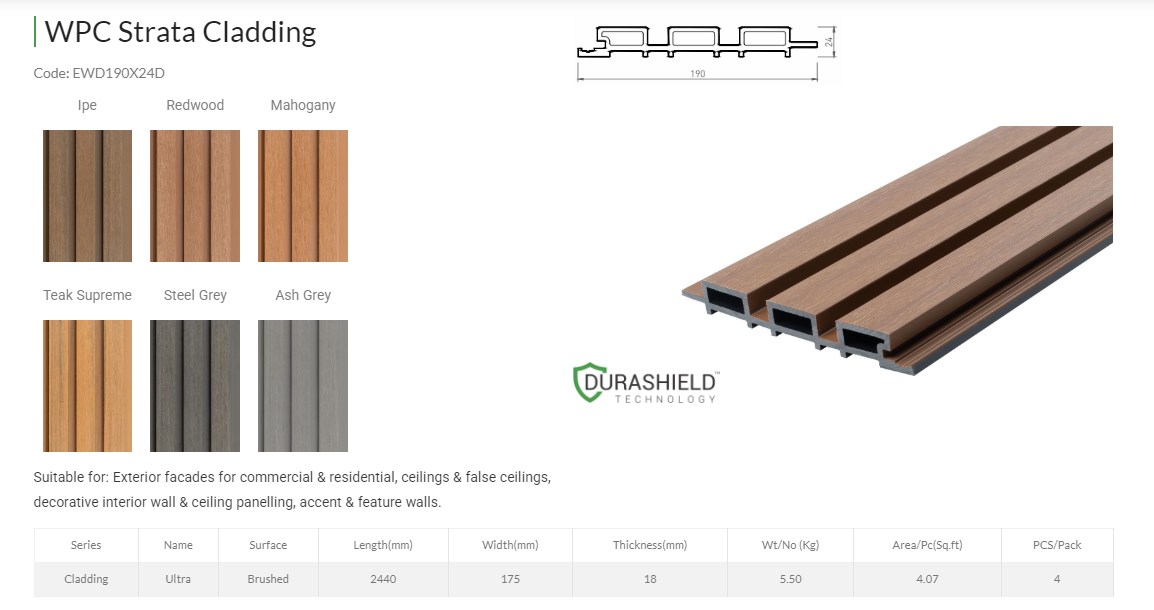
- Strata 24 (24 mm)→ versatile, balanced
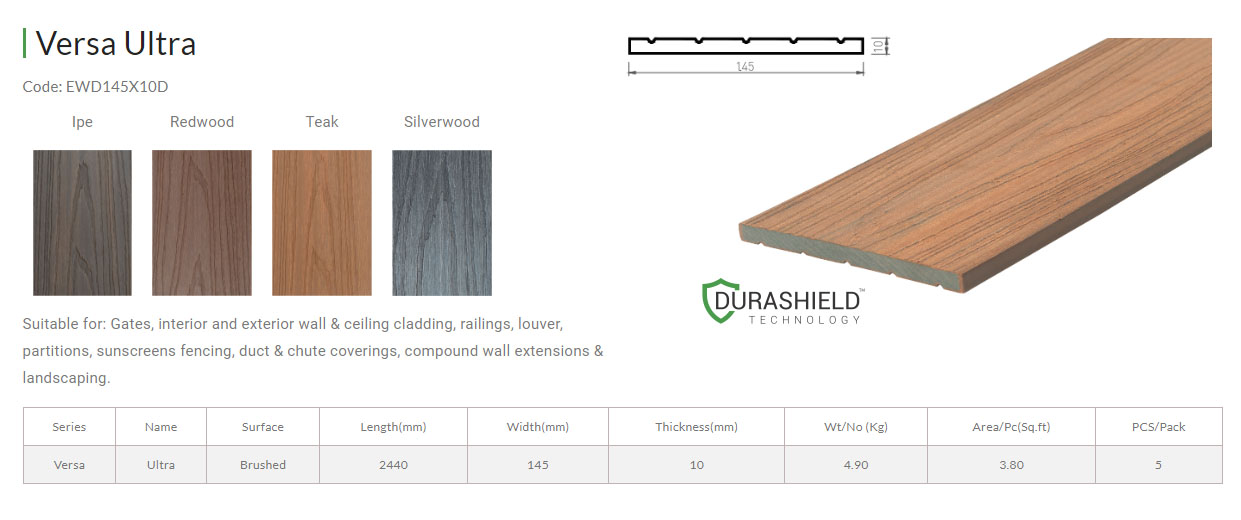
- Ultra 18 (18 mm)→ sleek and economical
Specify Aluminium Sub-Frames for Strength
For exterior façades, Everwood recommends aluminium battens due to:
- Dimensional stability
- Wind load resistance
- Moisture non-absorption
- Long-term perforSpecify Correct Fixings and Installation Details
- Architects must specify:
- /listmance
Structural Planning : The Backbone of a Successful Façade
Everwood’s façade guidance emphasizes how crucial sub-frame and installation systems are.
✔ Use Aluminium Sub-Frames
For exterior façades, Everwood recommends aluminium battens due to:
- Dimensional stability
- Wind load resistance
- Moisture non-absorption
- Long-term performance
✔ Ventilated Façade System
Every Everwood façade uses a ventilated system, enabling:
- Better airflow
- Lower wall temperatures
- Moisture escape
- Longer cladding lifespan
✔ Correct Fixings
Architects must specify:
- Stainless steel screws
- Everwood’s clip-based fixing
- Corner trims & edge profiles
- Proper batten spacing
✔ Expansion Gaps
WPC expands/contracts — expansion spacing must be included in drawings and BOQs.
Specify Correct Fixings and Installation Details
Architects must specify:
- Stainless steel screws
- Everwood’s clip-based fixing
- Corner trims & edge profiles
- Proper batten spacing
Account for Expansion Gaps in Drawings
WPC expands/contracts — expansion spacing must be included in drawings and BOQs.
3. Texture, Colour & Profile — The Aesthetic Core
Your material choices significantly influence the façade’s final impact.
Specify Fade-Resistant Colours for Longevity
Everwood’s UV-stabilised colours ensure long-term consistency — especially important for villas and resorts with large exposed elevations.
Consider Board Orientation for Visual Effect
Both orientations are possible:
- Vertical installation → modern, tall, minimal
- Horizontal installation → warm, wide, timber-like look
Match Profile to Project Type
- Luxury villas → Strata 33 Duo
- Beach resorts → Strata 24
- Urban villas or compact façades → Ultra 18
4. Understanding WPC Cladding Cost — For Accurate Client Conversations
When clients ask for WPC cladding cost, explain the complete picture.
1. Material Cost that includes:
- WPC panels
- Aluminium sub-frame
- Clips & screws
- Corner trims & accessories
2. Installation Cost : Depends on:
- Façade height
- Accessibility
- Site location
- Installation crew experience
3. Lifecycle Value : Unlike timber, WPC saves on:
- Annual painting/staining
- Termite treatment
- Replacement every 5–7 years
Upfront cost is higher; long-term ownership cost is lower.
5. Installation Checklist for Architects & Contractors
This ensures your façade performs for years.
✓ Pre-Installation
- Complete waterproofing
- Ensure plumb walls
- Keep surfaces dust-free
✓ Installation
- Use aluminium framework
- Maintain ventilation gap
- Install with clip system
- Use finishing trims
- Maintain alignment & expansion joints
✓ Post-Installation
- Protect façade until handover
- Avoid cement stains during ongoing work
6. Maintenance: Where Everwood WPC Wins Strongly
Everwood’s low-maintenance surface is a major advantage.
✓ No Painting, No Polishing
Everwood WPC holds its colour and texture without periodic treatments.
✓ Weatherproof Performance
Designed for:
- UV exposure
- Rain & humidity
- Heat
- Coastal salinity
Ideal for sea-facing villas, resort cottages, and tropical holiday homes.
7. When to Recommend Everwood WPC for Façades
Perfect for:
- Luxury villas
- Boutique resorts
- Holiday homes
- Pool-facing façades
- Modern hospitality buildings
- Exterior ceilings & soffits
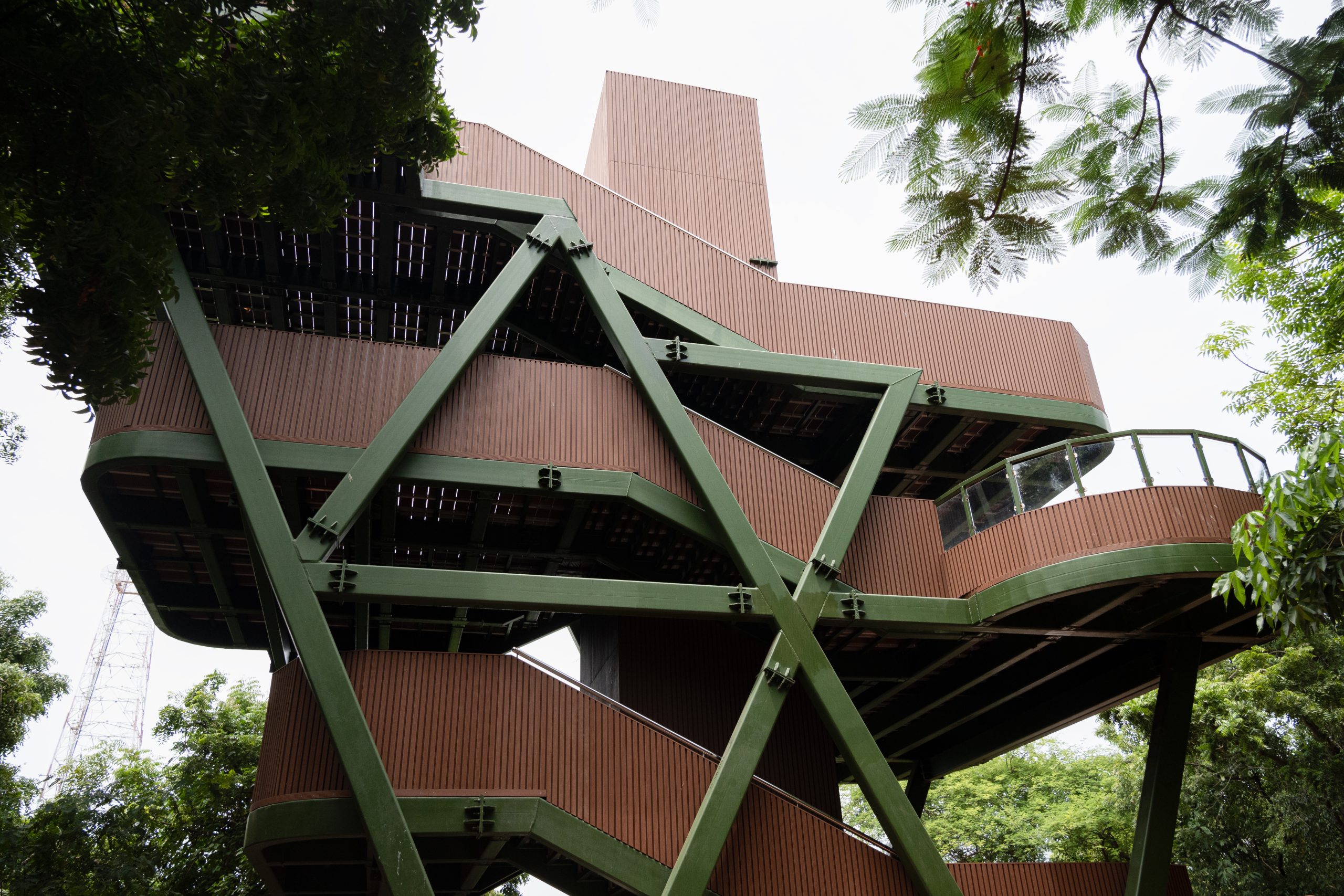
Everwood projects often involve elevations spanning 1500+ sq. ft., demonstrating scalability.
8. Everwood-Integrated Architect Specification Template
Architect Specification — Everwood Exterior WPC Façade Cladding
Material: Everwood exterior-grade WPC cladding
Applications: Exterior façades, walls, ceilings, soffits (ventilated)
Profiles:
- Strata 33 Duo – EWD176X33D (33 mm)
- Strata 24 – EWD190X24D (24 mm)
- Ultra 18 – EWD175X18D (18 mm)
Colours:
Teak Supreme, Walnut, Mahogany, IPE, Ash Grey, Steel Grey, Wenge, Charcoal
Surface Finishes:
Deep wood grain / natural brushed
Sub-Frame:
Aluminium battens + SS screws
Installation:
Clip-based fixing, ventilated façade assembly, expansion spacing
Accessories:
Starter clips, corner profiles, aluminium trims
Maintenance:
No painting or sealing. Wash periodically with water.
FAQ: Exterior Façade Cladding for Villas, Resorts & Premium Homes
1. Is Everwood WPC cladding suitable for exterior façades in India?
Yes. Everwood’s cladding profiles are engineered for exterior-grade applications with high durability, UV resistance, and strong weathering performance.
2. Can Everwood WPC be used for villas and resorts?
Absolutely. Everwood showcases multiple villa façades, resort elevations, and large-scale hospitality projects designed using their cladding systems.
3. What colours does Everwood offer for façade cladding?
Everwood’s exterior cladding comes in a premium, fade-resistant palette including: Teak Supreme, Walnut, Mahogany, IPE, Ash Grey, Steel Grey, Charcoal, and Wenge.
4. How durable is Everwood WPC compared to wood or HPL?
Everwood WPC does not warp, crack, peel, or decay under Indian weather like natural wood, and does not suffer the UV fading issues common with HPL.
5. What type of sub-frame does Everwood recommend?
For all exterior façade applications, Everwood specifies an aluminium sub-frame system for stability, longevity, and moisture resistance.
6. Can Everwood WPC be installed both horizontally and vertically?
Yes. Everwood cladding supports both orientations. Architects commonly use vertical installation for modern designs and horizontal for warm, natural elevations.
7. What maintenance does Everwood WPC require?
Very minimal. No painting, polishing, sealing, or termite treatments are required. Periodic washing with water is enough to maintain the surface.
8. Are Everwood colours fade-resistant?
Yes. Everwood profiles are UV-stabilised to retain colour over long-term exposure in harsh climates.
9. What profiles can architects specify for exterior façades?
Everwood’s exterior-grade profiles include:
- Strata 33 Duo (EWD176X33D) – 33 mm depth
- Strata 24 (EWD190X24D) – 24 mm depth
- Ultra 18 (EWD175X18D) – 18 mm depth
10. Can Everwood be used for large façade surfaces?
Yes. Everwood’s portfolio includes façade executions beyond 1500 sq. ft., proving scalability across villas and hospitality projects.
11. Is Everwood suitable for coastal villas and beachfront resorts?
Yes. Everwood’s weather-resistant, moisture-stable surfaces make it ideal for humid, saline, and rain-intense coastal zones.
12. Are installation accessories available?
Yes — Everwood provides starter clips, corner trims, end profiles, and aluminium accessories for clean, professional installation.
13. Does Everwood support ventilated façade systems?
Yes. Everwood recommends installing its cladding as a ventilated façade, ensuring airflow and reducing heat and moisture buildup.
14. What is the long-term cost advantage?
Everwood WPC significantly reduces lifetime costs because it eliminates painting, polishing, sealing, and termite treatment.
15. Can Everwood WPC be used for ceilings and soffits?
Yes. Everwood cladding is suitable for exterior ceilings, soffits, and canopy undersides, adding continuity to façade design.
Need Samples or Technical Guidance?
Explore our complete WPC façade cladding guide for architects
Call: +91 88700 79444
Visit
Email: crm@everwoodwpc.com